
Skip to content
deep tail tech

WorkStage Your Idea

A story the room starts, and the players finish

For Stage Your Idea, we built PatchWorkly: a phone-based improv game that connects a booked space, the people in it, and an AI game master guiding a shared story.

The room was already booked. The first minutes in it were still a blank. Stage Your Idea helps organisers find unusual spaces in Greece for workshops, meetings, productions, and celebrations. Once people arrive, a different task begins: getting them comfortable enough to take part. PatchWorkly gives that opening a story. Participants join from their phones, take on characters, and build something together, one short contribution at a time. The space and the organiser's input become part of the setting. An AI game master called Threshold guides the exchange.

Year
2026
Services
Custom Software · AI Assistants · System Integrations
Stage Your Idea — campaign visual
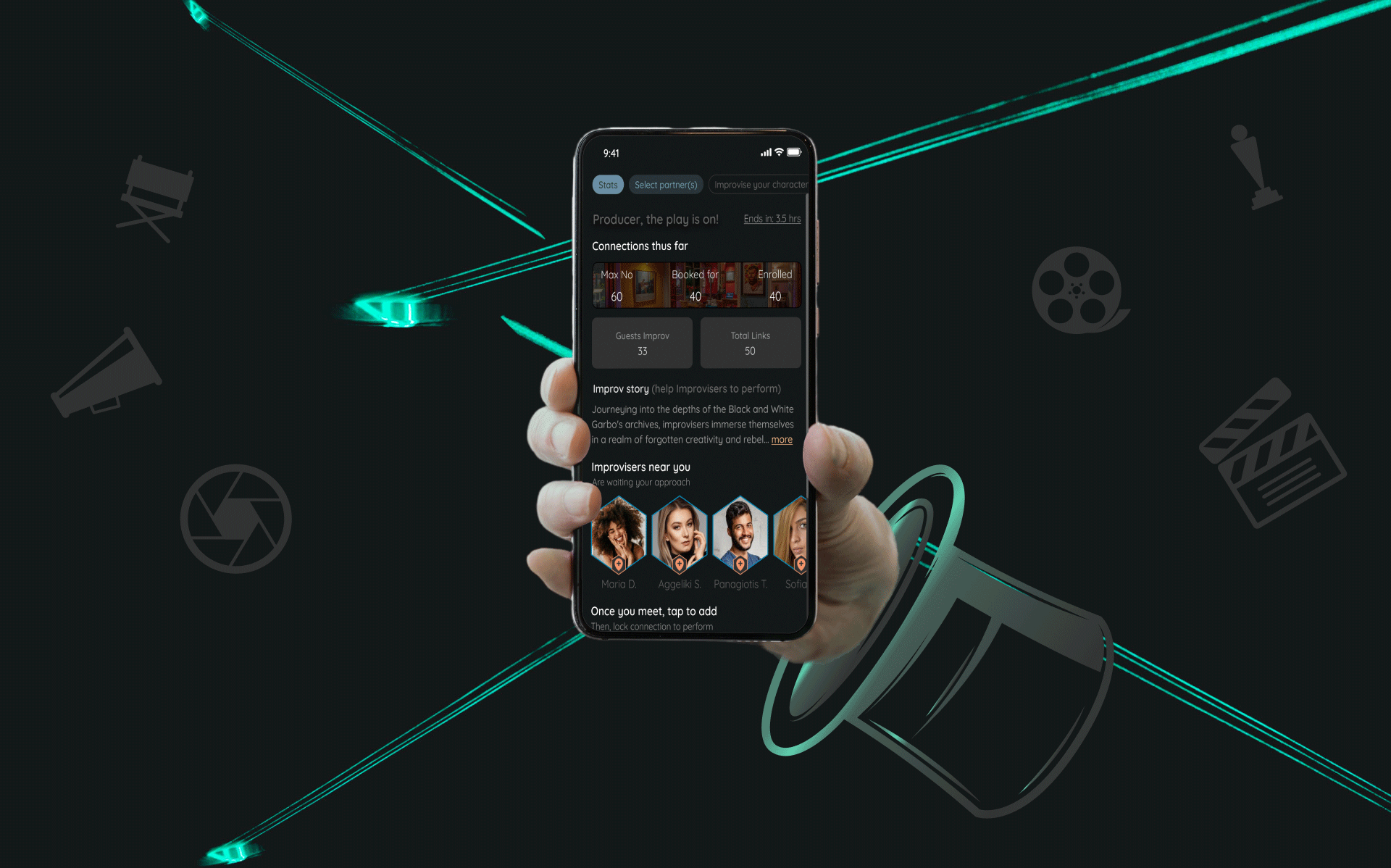
Hand holding a phone showing the PatchWorkly producer stats screen, rising from a magician's hat
On the phone
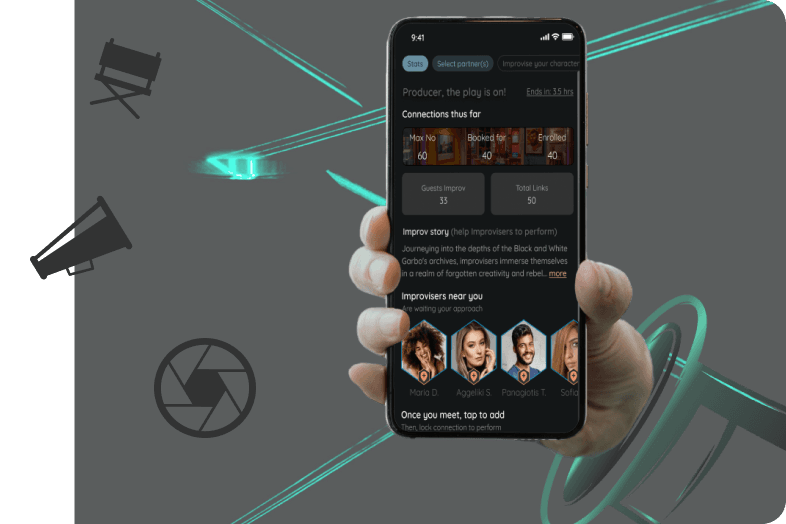
PatchWorkly booking invite graphic with the app open on a phone
Booking · invite
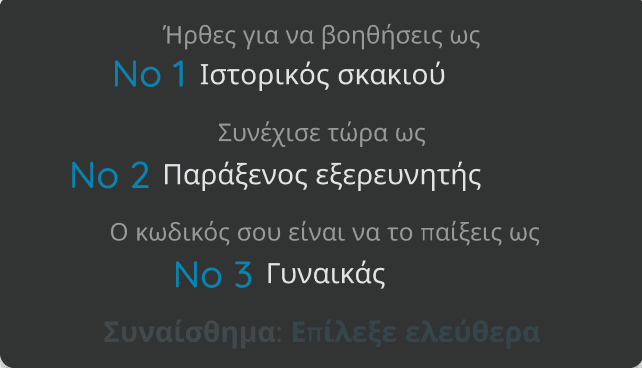
Baron mode character clue card in Greek for a PatchWorkly turn
Baron · clues
Playful Alterego chemistry mood image used in the PatchWorkly two-person mode
Alterego

Visuals · Stage Your Idea

The challenge

The problem

A workshop may bring together strangers, colleagues, or people preparing to present together. The activity needs to be easy to enter, with enough structure to help everyone contribute.

The brief called for a game that could travel with a booking and work on the phones participants already had. It also needed to draw on the character of the venue. The room would help set the scene for the story unfolding inside it.

The improvisation rules gave us the foundation: play a character, contribute to the story, and respect what other players have already established. Participants imagine a shared history and develop it together.

That creates a practical challenge for the software. It needs to keep track of the players, the rounds, the clues, and the story so far, while giving each person a clear next action.

Our work was to turn that creative premise into a digital experience connected to the way Stage Your Idea already brings people and places together.
The solution

The solution

We integrated PatchWorkly with Stage Your Idea accounts and booking information. Organisers enter an experience associated with their event, with access to the space page and its 3D tour.

From there, they can invite participants through a QR code and add a personal experience or detail to be shared with the group. That context is also passed to Threshold, giving the game master information about the particular event.

This connection makes the game part of the organiser's existing journey. The venue, invitation, and story context come together in one flow, and participants can join using their own devices.

The player experience is in Greek, with short written turns and a defined sequence of rounds. Those constraints give the activity a manageable shape and make the next contribution easier to approach.

Two ways to build a story

PatchWorkly offers two modes, each built around an unfinished story, character clues, and three rounds of play.

Baron is designed for groups of two to six. Players receive clues about a character's past, present, and future, then use them to contribute to the shared story. Each written turn is limited to 150 characters, keeping contributions brief and leaving room for the next person. Applause forms part of the interaction at the end of a round.

The Baron story is credited to Anastasios Mavrogiannis. We built the application and AI interactions around the supplied creative material and game rules.

Alterego adapts the experience for two people. A die introduces a prompt for the emotion or attitude a participant should bring to their response. Their partner then gives a score, creating a more personal exchange alongside the unfolding story.

The mode presents those participant ratings as playful "chemistry" results. They come from the players' responses to each other, rather than an AI assessment of their relationship.

The two modes share a storytelling foundation, but need different participant flows, feedback, and results. Supporting both meant developing the application beyond a single fixed game sequence.

Giving the AI a defined role

Threshold's role is to help the group continue.

We designed its instructions around the game's specific rules: connect a contribution to the next question, draw on the assigned clues, and treat earlier story details as established facts. It also receives the organiser's context so its guidance can relate to the event.

The application manages the game records, participants, turns, and rounds. The AI supplies the narrative guidance within that structure. This gives the creative interaction a defined place in the product, with the surrounding software responsible for coordinating the session.

Baron and Alterego have separate instructions reflecting their different mechanics. In Alterego, for example, the storytelling feedback considers the prompt and contribution, while the partner's numerical rating remains a separate part of the game.

We also built an admin interface for updating each mode's instructions without releasing a new version of the application. That makes it practical to refine the game master's wording and behaviour as the experience develops.

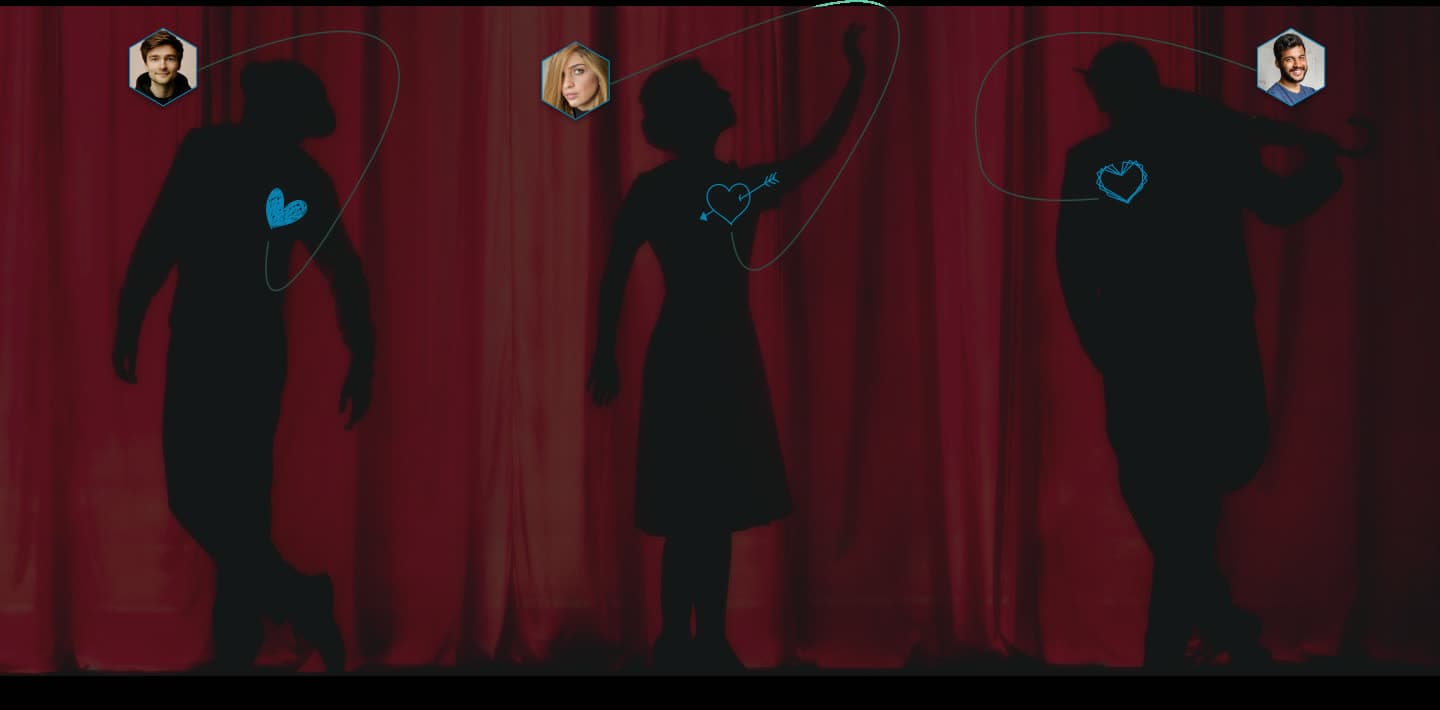
Stage silhouettes linked to hexagonal player portraits for a PatchWorkly session
In the room

The approach

Approach

Development began with the connection to Stage Your Idea: accounts, bookings, spaces, players, and game records. Establishing those foundations gave the storytelling experience a place within the client's existing service.

We then developed the shared story flow, including character clues, player contributions, round progression, feedback, and completion. Organiser context and the Greek-language game instructions shaped how the AI participated. Certificates and sharing features gave players a way to keep or share a result from the experience.

Alterego extended that foundation with a two-person format, emotional prompts, partner scoring, and its own results flow. The work continued across 2024–2026 as the application gained new capabilities and refinements.

Measurement and administration were part of that development. Custom analytics events were enabled after cookie consent, while editable game instructions gave the team a way to adjust the AI experience without changing the application code.

The project brought together several kinds of work: integrating with an existing platform, translating creative rules into screen interactions, coordinating a multiplayer session, and shaping an AI facilitator around a particular activity. Each had to support the same experience in the room.

Impact

Impact

Stage Your Idea now has a game it can offer organisers for workshops, team-building activities, and other gatherings. The company has featured PatchWorkly among its suggested workshop icebreakers.

The supplied database snapshot contains approximately 1,000 player records and 600 game records. These describe the recorded scale of the application; they do not establish how many unique people participated or how many sessions were completed.

The practical result is an experience an organiser can prepare around a booking and invite people into through a QR code. Participants take a character, contribute short turns, and develop a story together. The organiser's input and the venue give that story a setting of its own.

For Deep Tail Tech, the project demonstrates the work involved in bringing a distinctive creative idea into an existing service. The booking integration, game structure, interface, and AI guidance all serve one purpose: helping the people in the room begin something together.

Technologies

Stack

  • Next.js
  • TypeScript
  • LLM APIs

Have a similar challenge?

Start a conversation about the system you need.